


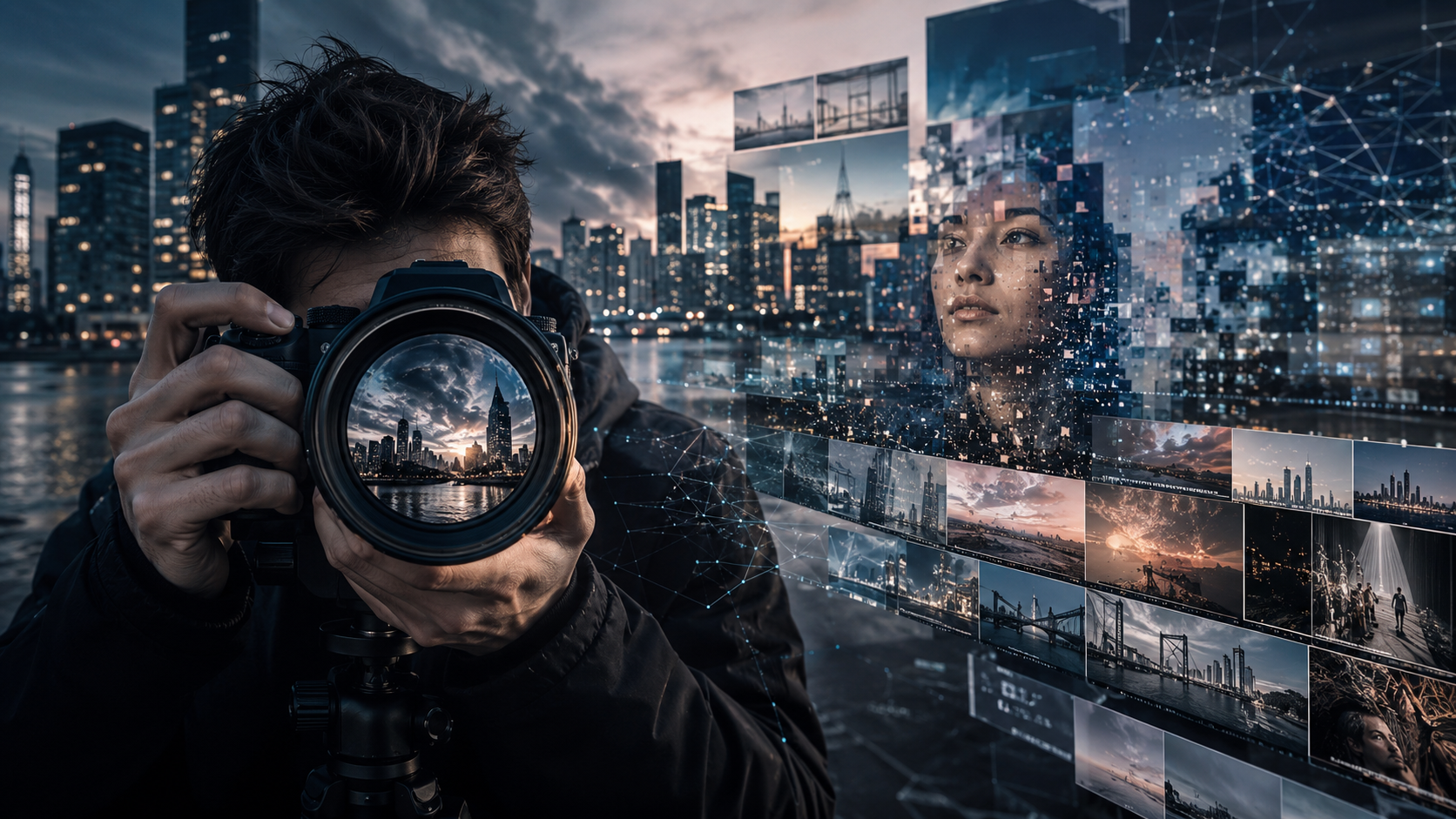
The Photograph After A.I.: Can We Still Trust the Photographer?
Photography has never been a perfectly objective representation of reality. Every photograph is shaped by choices: where the photographer stands, what remains outside the frame, when the shutter is released, which image is selected and how it is processed. Darkroom techniques, retouching and staged scenes existed long before digital photography.
Artificial intelligence, however, changes the scale of the problem. It can do more than improve what a camera recorded. It can invent convincing details that were never present: a different sky, an additional person, a changed expression or even an entire event. These alterations can be produced quickly, cheaply and almost invisibly.
As a result, the traditional question—“Has this photograph been edited?”—is no longer sufficient. Almost every digital photograph is processed in some way. The more important questions are: What was captured by the camera? What was added or removed? And who is willing to take responsibility for the final image?
A Powerful Tool and a Creative Temptation
A.I. is not simply an enemy of photography. It can restore damaged archives, reduce noise, correct technical imperfections and help photographers organize enormous collections. Artists can use it to combine photography with imagination, memory and fiction. It offers new forms of visual experimentation, just as collage, digital manipulation and colour processing once did.
But convenience has consequences. When software automatically perfects skin, replaces skies and removes unwanted objects, the accidental details that make a photograph distinctive may disappear. Images risk becoming technically flawless but emotionally interchangeable.
The greater danger is not that A.I. will destroy photographic art. It is that it may weaken the photograph’s function as evidence. If any event can be convincingly manufactured, viewers may eventually distrust authentic photographs as well. A real image of injustice, war or political misconduct can then be dismissed with two words: “Probably A.I.”
Artistic Truth and Factual Truth
A clear distinction must be made between artistic and documentary photography.
An artist may construct an imaginary world, combine several exposures or introduce synthetic elements. There is nothing inherently dishonest about this. A fictional image can communicate an emotional or philosophical truth. The ethical problem begins when a constructed image is presented as an unaltered record of an actual event.
In journalism, science, law and historical documentation, stricter standards are therefore necessary. The 2026 World Press Photo rules, for example, require photographs to be camera-made and prohibit synthetic imagery and generative fill. Limited A.I.-assisted enhancement is permitted only when it does not introduce or remove information. This distinction will become increasingly important.
A New Contract of Trust
In the future, viewers will not be able to establish authenticity merely by examining pixels. Trust will depend on the photographer’s working method, reputation and willingness to be transparent.
Photographers should clearly describe their images using understandable categories such as:
- Camera-made: captured through a lens without generative alterations.
- A.I.-assisted: A.I. used for technical corrections without changing the scene’s essential content.
- A.I.-composited: photographed and synthetic elements deliberately combined.
- A.I.-generated: primarily produced by a generative system rather than a camera.
Meaningful changes should be disclosed. Removing a person, changing an expression or extending a landscape is fundamentally different from adjusting contrast or correcting a colour cast. The purpose of disclosure is not to produce an exhaustive technical diary. It is to tell viewers whether the visual facts have been changed.
Original files, contact sheets and editing histories will also become more valuable. In situations where factual accuracy matters, a photographer should be able to show how an image developed from capture to publication.
Technology can assist with this process. Content Credentials based on the C2PA standard can attach a tamper-evident record of an image’s origin and modifications. But such credentials do not independently prove that an image tells the truth. They show where it came from and what happened to the file. Trust still depends on the person or institution making the claims.
The Photographer as Witness
Paradoxically, A.I. may make the human photographer more important rather than less important. When realistic images can be generated by anyone, the value of photography will no longer rest mainly on technical perfection. It will rest on presence, experience and responsibility.
The photographer can say: I was there. I saw this. I made these choices. These are the changes I made afterwards. I am prepared to defend the image and its caption.
That statement cannot be supplied by a camera or an algorithm. It is a moral commitment made by a person.
Trust in photography has therefore never resided entirely in the camera. It has always depended partly on the character and credibility of the photographer. A.I. simply makes that dependence impossible to ignore.
The trustworthy photographer of the future will not necessarily be someone who refuses to use artificial intelligence. It will be someone who never hides what artificial intelligence was allowed to do. In the age of synthetic images, honesty will become not only an ethical duty but an essential part of the photographic work itself.
Add comment
Comments